The first minutes after a collision are about people and safety, not insurance paperwork. Stop, assess immediate danger and call the emergency services when anyone may be injured or the scene is unsafe. Cyprus Police road-safety guidance identifies 112 and 199 for an accident emergency.
Once urgent risks are controlled, preserve reliable information. The exact reporting and claim steps depend on the circumstances, the vehicles involved and the policy wording, so notify the insurer or assistance service promptly and follow its instructions.
1. Make the scene as safe as circumstances allow
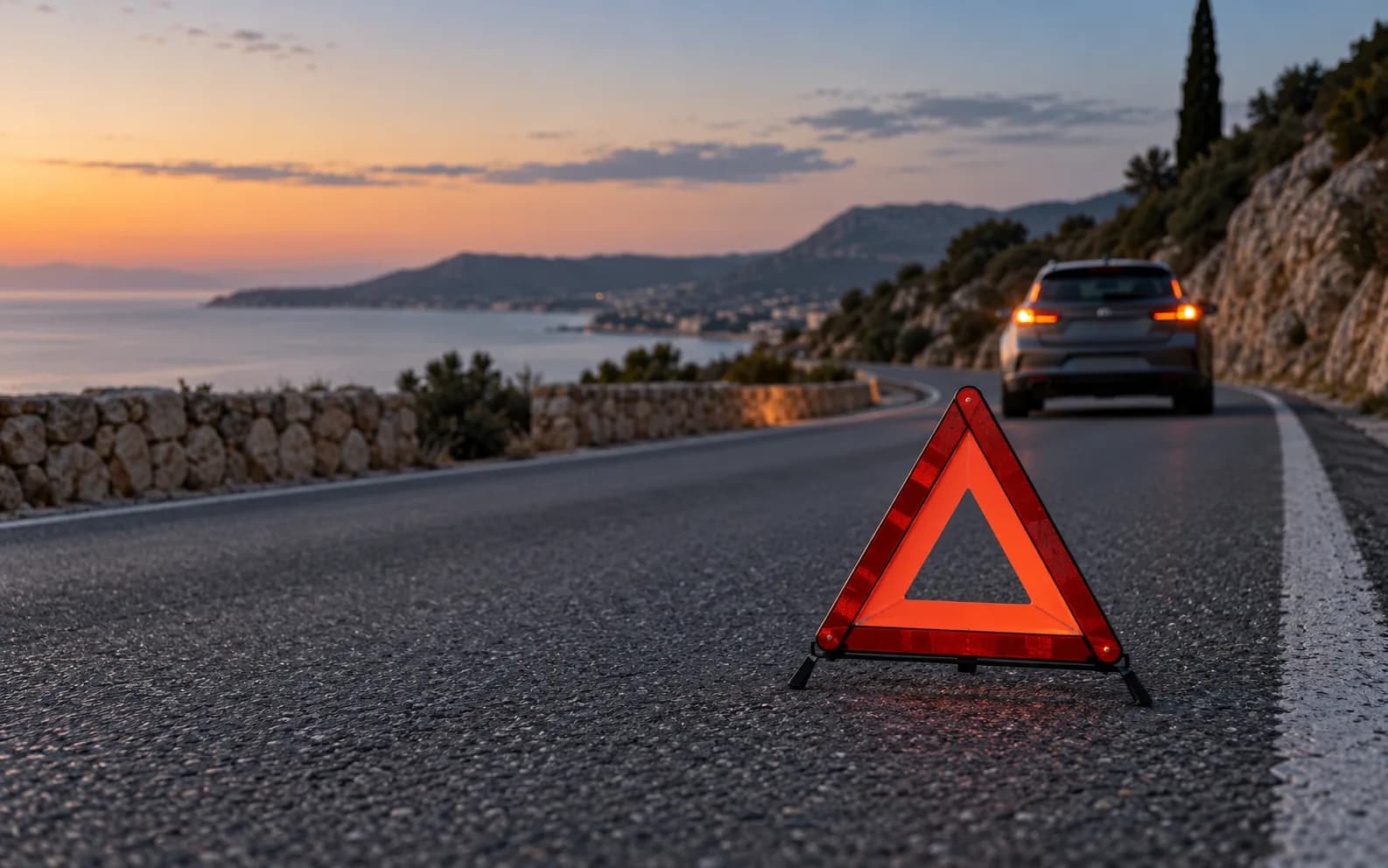
- Stop and switch on hazard lights.
- Check yourself, passengers and other people for injury.
- Call 112 or 199 when emergency help is needed.
- Do not move an injured person unless there is an immediate danger.
- Avoid standing in a live traffic lane.
- Do not argue about blame or make promises about payment.
If vehicles must be moved for safety, photograph their positions and surrounding road markings first when this can be done safely. Follow Police directions at the scene.
2. Record the vehicles and people
Collect the other driver's name, contact details, registration number and insurer information. Record the make, model and visible damage of every vehicle. If a foreign-registered vehicle is involved, note the registration country and ask to see the Green Card or insurance document.
Take wide photographs showing the road, junction, lanes, signs, traffic lights and final positions, then closer images of damage and debris. Keep original files. Note the time, weather and anything that affected visibility. Ask witnesses for contact details but do not pressure them to agree with an account.
3. Notify the insurer or assistance service
Use the claim or assistance number in the policy documents. Give factual information and ask what must happen before towing or repairs. Some policies require rapid notification, an approved repairer or an inspection. Keep the claim reference, the name of the person contacted and copies of every document sent.
Do not arrange non-emergency repairs until the responsible insurer or organisation has confirmed whether an inspection is required. Preventing further damage is different from authorising full repair work; ask when uncertain.
When the other vehicle appears uninsured
The Motor Insurers' Fund publishes special instructions for a person who is not responsible and seeks compensation after an accident with an uninsured vehicle in Cyprus. For property damage, its guidance says to notify Police of the uninsured vehicle, notify the Fund so it can inspect the damage before repairs, and submit the prescribed claim with the vehicle registration certificate and insurance certificate that was valid on the accident date.
For bodily injury, the Fund also requires relevant medical certificates and supporting evidence. Where both injury and property damage are involved, both sets of requirements matter. Check the current MIF form and instructions for the individual case.
When the other vehicle is unknown
For a hit-and-run or otherwise unidentified vehicle, the MIF guidance says to call Police to attend or notify them so the accident is recorded within 48 hours, notify the Fund immediately for investigation, and submit the required documents. Eligibility and the types of compensation available are subject to conditions; do not assume every loss will be recoverable.
When a foreign-registered vehicle is involved
The MIF advises calling Police to record the accident, noting the foreign registration and country, asking for the Green Card or insurance policy and contacting the Cyprus International Insurance Bureau promptly. The Bureau can identify a correspondent in Cyprus or explain the applicable handling route. Its guidance also says damage should be inspected before repairs when the Fund is handling the matter.
Injuries and medical evidence
Seek appropriate medical attention. Keep medical reports, prescriptions, receipts, absence records and other documents connected with the injury. Symptoms can develop after the initial shock, but any medical decision should be made with a qualified professional, not for the purpose of strengthening a claim.
Common mistakes to avoid
- Leaving without recording the other vehicle or driver.
- Repairing the car before a required inspection.
- Editing, compressing or discarding the original photographs.
- Posting allegations or private details on social media.
- Signing a statement you do not understand.
- Missing a policy notification deadline.
- Assuming the Police report automatically notifies the insurer.
Your after-accident file
- Emergency and Police reference numbers.
- Driver, vehicle, insurer and witness details.
- Original photographs and any available video.
- A written timeline made while events are fresh.
- Policy, registration and driving-licence copies.
- Medical, towing, storage and repair documents.
- Emails, claim forms and the claim reference.
This is a general sequence, not a decision about liability or compensation. Emergency-service, Police, insurer and Motor Insurers' Fund instructions take precedence for the actual incident.